What is AWWA Flange?
AWWA stands for American Water Works Association. It was specifically designed for application in water industries. AWWA has developed several different standards for flange and fittings specifically for use in Water-related process piping. Here I list some notable specs related to flange.
- AWWA C207: Carbon Steel pipe flanges for waterwork services. Available in sizes 4 NPS to 144 NPS
- AWWA C228: Stainless steel pipe flanges for waterwork services. Available in sizes 4 NPS to 72 NPS
- AWWA C229: Fusion-Bonded Epoxy Coatings and Linings for Steel Water Pipe and Fittings
- AWWA C604: Installation of Vitrified clay pipes and fittings
- AWWA C606: This specification covers the design and installation of Grooved Shouldered Joints.
ASME standards are used in worldwide projects where AWWA standards are, mostly and widely used in North America.
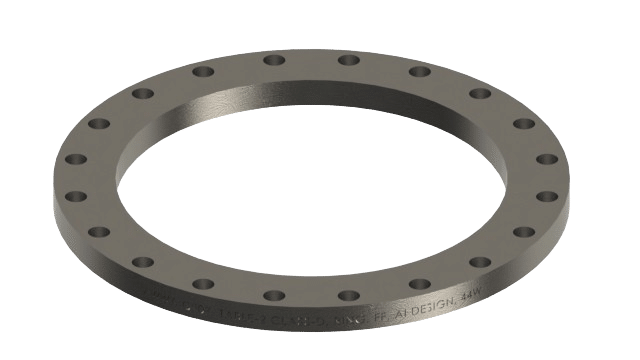
AWWA Flange Dimensions: C207 (Ring Style)
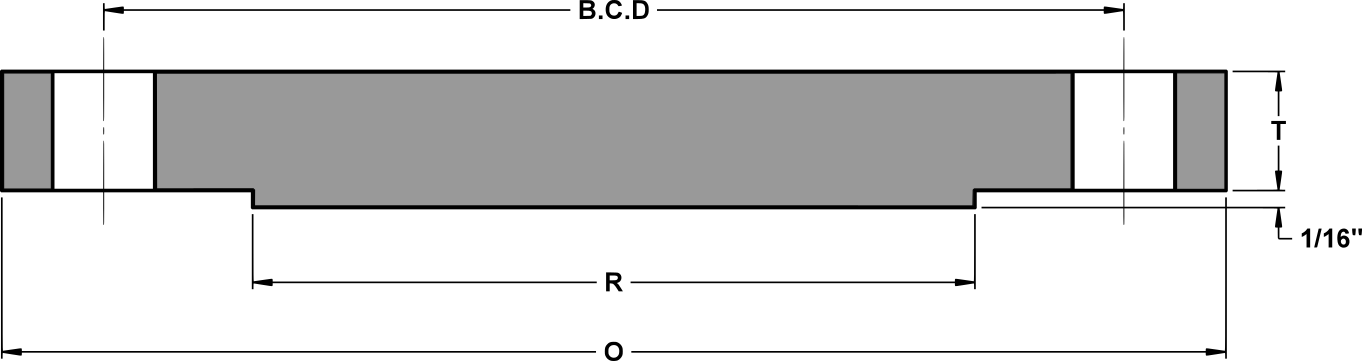
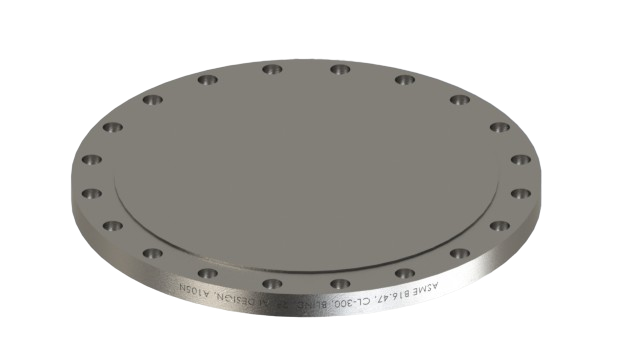
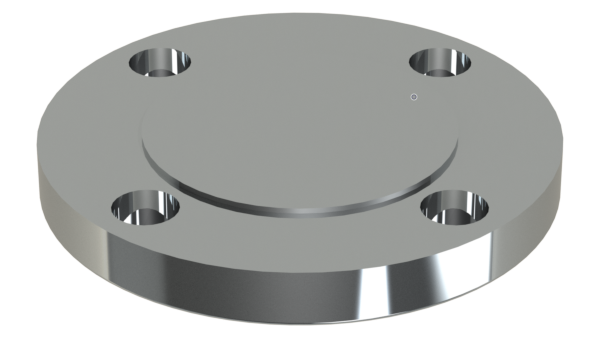
AWWA standards cover mainly two Different Slip-on flanges, Ring-type and Hub-type. This standard also describes some blind flanges. In this Article, We are mostly covering the Ring-type flanges that are made without a hub.
AWWA flange doesn’t have a pressure rating similar to ASME. It is defined as an Example “Table-2, Class-B”. Each table and class has its maximum allowable working pressure that helps engineers choose the right flange. Here I have listed a few examples to take a look at:
AWWA C207 ring flanges are designed to be cheaper than the traditional B16.5 Flanges. It also can go up to 144″ NPS in size. They are specially designed for low pressure rather than unnecessary bulky designs like B16.5 and Boiler flanges.
AWWA flanges (Ring Style) are easy to manufacture. It can also simple cut from a plate due to simple design.
1. AWWA Class B Flanges:
These flanges are suitable for water pressure up to and including 86 psi (593 kPa) at atmospheric temperature.
2. AWWA Class D Flanges:
Sizes 4 to 12 NPS are suitable for water pressure175 psi and sizes greater than 12 NPS are suitable for 150 psi at atmospheric temperature.
3. AWWA Class E Flanges:
These flanges are suitable for water pressure up to and including 275 psi (1896 kPa) at atmospheric temperature. Table-4, class-E flanges are identical in dimension to ASME B16.5 CL-150 flanges up to 24 NPS and similar to ASME B16.1 Class-125 large Diameter flanges above 24 NPS. (without raised face)
4. AWWA Class F Flanges:
These flanges are suitable for water pressure up to and including 300 psi (2068 kPa) at atmospheric temperature. Flange Outside diameter and bolt-circle diameters confirm to ASME B16.5 CL-300 flanges up to 24 NPS, ASME B16.1 Class-250 flanges up to 48 NPS, and ASME B16.47 Class 300 for 26-30in.
NOTE: CL300 flange doesn’t mean it is rated for 300psi. Please see the temperature & pressure ratings based on flange materials in these tables.
Frequently Asked Questions
Q: Can I bolt an AWWA C207 flange to an ANSI B16.5 flange?
Answer: Yes, but only for certain classes. AWWA Class D and Class E flanges share the same bolt circle and hole count as ASME B16.5 (Class 150). This makes them “inter-changeable,” which is helpful when connecting a steel pipe to a standard industrial valve.
Q: Why are they “Flat Face” instead of “Raised Face”?
Answer: Water systems often use cast-iron pumps or valves. If you used a “Raised Face” flange, the uneven pressure from tightening the bolts could snap the cast-iron flange. A “Flat Face” ensures even contact and protects brittle equipment.
Q: What material is best for C207 flanges?
Answer: For most water applications, ASTM A36 carbon steel is the standard for plate flanges. For corrosive environments or wastewater, they are often hot-dip galvanized or manufactured from 304/316 Stainless Steel.
This page will cover key dimensions for AWWA C207 Slip-on Flanges From 4 NPS to 144 NPS class B, D, E & F.